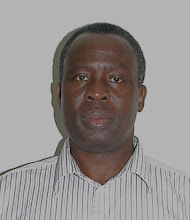
I have not followed the so called in-fighting in UPC. But from what I have heard recently, Akena is doing something very bad; that of confusing members of UPC. Even if you factor in pre-independence wars between Acholi and Lango, it is still wrong to combine these issues with UPC issues. Acholi and Langi are living with the pain that has been subjected to them by different regimes in Uganda as peacefully as possible. In fact it is politicians who cause the misunderstanding for their own selfish interests.
Akena lost the election for party president in an open competition. This is not a demotion or a crime of any kind. One period one leader. What more can he do in between such elections? Any sane person would understand that, as a party member, you have to behave in a way that promotes party interests. But if he is fighting the party president at every turn then he trying to destroy the party. And the reason cannot be because he has to be the party president.
Is it not questionable that a former party president contender would also act as an agitator and be the first to rise to question the party president?
Recently, Jimmy Akena jumped at the party president during a press conference organized for the members of the press. Why would you do something like this in the open forum of perhaps hostile people to the party? If Jimmy cannot help rebuild the party then maybe he should take a leave of absence to cool down. But he should not withhold his support for Mr Otunnu the current party president. People look to him as the son of first UPC president and the man who founded the party now fondly referred to as "the congress of the people." Even if he is not the party president, there is always a special place for him in the hearts of the members of the party. One day that feeling may be translated into some party actions.
A quote from the Common Man's Charter should enlighten him, "(vii) To ensure that no citizen of Uganda will enjoy any special privilege, status or title by virtue of birth, descent or heredity;"
The UPC has its rules and members should know that they are doing right or wrong by those same rules.
Tuesday, August 23, 2011


Thursday, February 10, 2011
TORRENT OF CHANGE SWEEPING AFRICA
The history of Africa has been one of wars of oppression of one kind or the other. After the attainment of independence, many African leaders adopted exactly the same attitude the colonialists used towards the people. Then came tribalism and other forms of ills that bedeviled the rule of law. The rulers bypassed elections and instituted tyranny instead of democracy. Many stayed in powers for very long time. Who ever thought Mobutu could lose power and even die in exile? That is precisely what happened.
People will not demonstrate against a government for no reason. They put up with a lot of hardship and corruption and when they cannot take it any longer, they take to the street in many forms. Sometimes the event can be a spontaneous release of anger and frustration. It happened in Tunisia, Yemen and many parts of the Arab world. Now it is happening in Egypt with such force and power that Mubarak has no alternative but to relinquish power. The number of people coming out has been increasing as Mubarak denies what he is witnessing.
The Egyptian Military has shown leadership and stayed away from the political issues of governing. The words that came from the highest command of the Egyptian army puts many other African dictators and their armies to great shame. The words that come out give more confidence to the people that the army is theirs.
They statement from the Christian Science monitor said,
So, the big question is, "Does the current Uganda army represent and protect freedom of the people of Uganda or is it an occupation army?"
People will not demonstrate against a government for no reason. They put up with a lot of hardship and corruption and when they cannot take it any longer, they take to the street in many forms. Sometimes the event can be a spontaneous release of anger and frustration. It happened in Tunisia, Yemen and many parts of the Arab world. Now it is happening in Egypt with such force and power that Mubarak has no alternative but to relinquish power. The number of people coming out has been increasing as Mubarak denies what he is witnessing.
The Egyptian Military has shown leadership and stayed away from the political issues of governing. The words that came from the highest command of the Egyptian army puts many other African dictators and their armies to great shame. The words that come out give more confidence to the people that the army is theirs.
They statement from the Christian Science monitor said,
The generals had a statement read on State TV. “Based on the responsibility of the armed forces and its commitment to protect the people... and in support of the legitimate demands of the people [the army] will continue meeting on a continuous basis to examine measures to be taken to protect the nation and its gains and the ambitions of the great Egyptian people."
Unfortunately, in Uganda the NRA/NRM always confront the people with "We fought..." whenever there is a prospect of electing one not aligned or part of the original people who went to the bush to fight the government in power then.So, the big question is, "Does the current Uganda army represent and protect freedom of the people of Uganda or is it an occupation army?"
Saturday, December 25, 2010
Leadership and Aspirations of Ugandans
In the year 2011 there will be a general election in Uganda to elect the president for the next five years. Museveni has been in power since January 26 1986. That gives him 25 years of continuous rule as president of the country. The twenty five years started with "fundamental change" philosophy. That fundamental change could not have been the sanctity of life because people were subjected to even worse inhuman and traumatic conditions like 'kandoya' and being labeled 'biological substances.' Killing became an administrative policy and continued to displace people in the northern part of the country, particularly the Acholis. This lead to an obvious offshoot of self defense that grew into a large group of fighters named Lord's Resistance Army. This resistance was quickly converted into a scapegoat of varying military expeditions into neighboring countries with the aim of entrenching the NRM into power. And this is what has continued for the last 25 years.
The NRM really wanted no structure for the democratic governance of the country. All they wanted, and still want up to now, is to stay in power perpetually. For first three years after they came to power in 1986, it was nothing but war in the north and when they reached the second year they started talking about first writing a new constitution. That took care of the first five years.
The second five years was now the official first term of five years that NRM was in power. At this time the country was effectively divided into two parts; the north comprising of areas of Teso northwards, and the southern parts in which there was peace. Sham elections were carried out in this northern region with the people on the run through war-mongering. Towards the end of the second term which was NRM's first official term, NRM was using a combination of threat of the return of the Banyanya to keep the southern folks in their support and the fact that this next election would be the last term for Museveni in power. So, after ten years in power, Museveni was now 'elected' to his last term in office. Early in the eleventh and twelfth years in power, it became clear that two terms was not really enough for the NRM even though it was their third term in office. They began agitating for change to the constitution so that Museveni could run for as long as he wanted. That constitution is due to be changed back to two five-year terms for a presidency once Museveni is no longer running for office.
The way the constitution was changed brought about great fear in many of NRM members as it put them in a bad light. Elections were held in such a way that the NRM always had a upper hand especially with the war in the north and displacement of the population. A new party was formed as opposition to NRM and it was called FDC, Front for Democratic Change lead by Dr. Kizza Besigye, a one time confidant and personal doctor of President Museveni.
Museveni has done a lot during his twenty five years in power. Some of the plans could really have brought about 'fundamental change' for the better to the people. But corruption ate away at every opportunity and impunity destroyed all chance of correcting mistakes being made by the military wings of the NRM. He also introduced many unworkable ideas that should have been left to the local leaders. Museveni wanted to develop a rich middle class but because the administration was top heavy, nothing trickled down to the ordinary person as corruption diverted all resources to his cronies. The irony is that these are the kind of things which Museveni would start a bush war for, but now he cannot do it since he is in state house.
So, what kind of votes will Museveni get and would it be enough to win the election? To answer this question one needs to look at the composition of the army and of the civil service personnel. Whenever there is a vibrant opposition, the army trembles and feel threatened. The same thing applies to the civil servants. The men carrying the ballot boxes and guarding it cannot be trusted to remain impartial. They easily get emotionally involved because they have vested interests in maintaining the status quo.
There are no policies the NRM have promulgated and carried out successfully to remind people that they deserve to remain in office. That is why UPC is doing great service to the country by empowering the people with knowledge and information to form the basis of the next development plan. People want freedom and security so they can develop themselves according to their abilities. The UPC detractors say that UPC will not win and should have stayed in the IPC but the party is better where it is. When the people know their rights and stand up for them, then there will be a fundamental change in the country. This land is ours.
The NRM really wanted no structure for the democratic governance of the country. All they wanted, and still want up to now, is to stay in power perpetually. For first three years after they came to power in 1986, it was nothing but war in the north and when they reached the second year they started talking about first writing a new constitution. That took care of the first five years.
The second five years was now the official first term of five years that NRM was in power. At this time the country was effectively divided into two parts; the north comprising of areas of Teso northwards, and the southern parts in which there was peace. Sham elections were carried out in this northern region with the people on the run through war-mongering. Towards the end of the second term which was NRM's first official term, NRM was using a combination of threat of the return of the Banyanya to keep the southern folks in their support and the fact that this next election would be the last term for Museveni in power. So, after ten years in power, Museveni was now 'elected' to his last term in office. Early in the eleventh and twelfth years in power, it became clear that two terms was not really enough for the NRM even though it was their third term in office. They began agitating for change to the constitution so that Museveni could run for as long as he wanted. That constitution is due to be changed back to two five-year terms for a presidency once Museveni is no longer running for office.
The way the constitution was changed brought about great fear in many of NRM members as it put them in a bad light. Elections were held in such a way that the NRM always had a upper hand especially with the war in the north and displacement of the population. A new party was formed as opposition to NRM and it was called FDC, Front for Democratic Change lead by Dr. Kizza Besigye, a one time confidant and personal doctor of President Museveni.
Museveni has done a lot during his twenty five years in power. Some of the plans could really have brought about 'fundamental change' for the better to the people. But corruption ate away at every opportunity and impunity destroyed all chance of correcting mistakes being made by the military wings of the NRM. He also introduced many unworkable ideas that should have been left to the local leaders. Museveni wanted to develop a rich middle class but because the administration was top heavy, nothing trickled down to the ordinary person as corruption diverted all resources to his cronies. The irony is that these are the kind of things which Museveni would start a bush war for, but now he cannot do it since he is in state house.
So, what kind of votes will Museveni get and would it be enough to win the election? To answer this question one needs to look at the composition of the army and of the civil service personnel. Whenever there is a vibrant opposition, the army trembles and feel threatened. The same thing applies to the civil servants. The men carrying the ballot boxes and guarding it cannot be trusted to remain impartial. They easily get emotionally involved because they have vested interests in maintaining the status quo.
There are no policies the NRM have promulgated and carried out successfully to remind people that they deserve to remain in office. That is why UPC is doing great service to the country by empowering the people with knowledge and information to form the basis of the next development plan. People want freedom and security so they can develop themselves according to their abilities. The UPC detractors say that UPC will not win and should have stayed in the IPC but the party is better where it is. When the people know their rights and stand up for them, then there will be a fundamental change in the country. This land is ours.
Tuesday, November 02, 2010
The Defector
The announcement that some UPC chief members have defected to NRM is sad news for the country as a whole and UPC in particular. No one likes to lose any of its members but it is inevitable that members are lost from time to time. Loss of a member can generate change in the organization concerned which may be good or bad.
At this juncture in UPC, the party needs very active people to campaign vigorously at the grassroots to put the party's manifesto into the minds of the people. Can Hajj Badru Wegulo do this at his age? Apparently, the answer is "No." So, this is not a big deal. UPC is a party of ideas, a party of the people. In that case, it is better for it to concentrate on creating a viable followings and active participants in promoting its message to the people.
The people who have defected have no fight left in them to bring about change. They are either afraid or unenthusiastic about change and therefore did the right thing to leave place for those more committed to bring change in Uganda. If Museveni has been in power for the last 24 years and brought about only misery to the people, how can he change today? He has never experienced the hardship people go through. If he believes that the people suffering is because they are in other parties other than NRM how can that affect a change in the whole country? Why did Museveni go to Nambole Stadium in full military garb after 24 years in power? Who is he fighting? With Museveni, the mentality of entitlement will not cease. Vote him out of office so somebody more progressive can bring development to the country. Get rid of the parasites from government.
At this juncture in UPC, the party needs very active people to campaign vigorously at the grassroots to put the party's manifesto into the minds of the people. Can Hajj Badru Wegulo do this at his age? Apparently, the answer is "No." So, this is not a big deal. UPC is a party of ideas, a party of the people. In that case, it is better for it to concentrate on creating a viable followings and active participants in promoting its message to the people.
The people who have defected have no fight left in them to bring about change. They are either afraid or unenthusiastic about change and therefore did the right thing to leave place for those more committed to bring change in Uganda. If Museveni has been in power for the last 24 years and brought about only misery to the people, how can he change today? He has never experienced the hardship people go through. If he believes that the people suffering is because they are in other parties other than NRM how can that affect a change in the whole country? Why did Museveni go to Nambole Stadium in full military garb after 24 years in power? Who is he fighting? With Museveni, the mentality of entitlement will not cease. Vote him out of office so somebody more progressive can bring development to the country. Get rid of the parasites from government.
Monday, April 26, 2010
Who Is State House
NRA did some of the most unspeakable things in northern Uganda. In their drive for complete domination, once and for all, over the people of northern Uganda, the NRA soldiers cordoned families and had their soldiers sodomize the men in front of their families, burnt their granaries and looted their cows in a show of power. These actions traumatized the people so much that Museveni is unaware of the pain people feel when they see him. Instead of him apologizing, he is asking the radio stations and people of northern Uganda to apologize. By threatening them with next step, "President Museveni’s Press Secretary Tamale Mirundi yesterday told journalists at the Uganda Media Centre that the radios have to apologise or face punitive action," he is reminding the people of northern Uganda that ' have you forgotten "agungung?"'
We the people of Uganda want to know today, is state house government of Uganda or is it NRA base? There is a problem with NRA/M operatives. Either they do not know what an elected government is supposed to be or they do not respect the people of Uganda. Even if the government has been popularly elected, it must rule according to the law. I know there is a strong temptation to think, we beat them at war, we beat them in election, therefore we are "it"mentality.
The day NRA/M understand the reasons why they 'went to the bush' and then realize that they are just ordinary Ugandans doing something for a specific good of the country, we shall have free and fair election.
Museveni should stop using his agents to disturb and destroy the peace that should prevail in northern Uganda. After seeing service under the British colonialists, many of the former KAR, UA, UNLA, NRA army personnel are tired of pseudo-military-politics that brings no development to the people or relief to the military people. Believe me , I know of no one who would join the army in order to go and fight a tribe or people in Uganda. When Gen. Tito agreed to sit down and talk, it was not because of NRA or Museveni, it was because the people of Uganda are so difficult to rule that he wanted to witness them coming together at one table as brothers and sisters and state their grievances. When the effort collapsed, did you see Gen. Tito attempt to go to the bush to take over the government? No. The Kony phenomena is an irrational reaction to NRA/M irrational 'agugung' tactics. No matter how much you claim the high ground you cannot bypass the peoples traumatic experience of NRA/M army. I see it fit for state house to apologize for these atrocities rather than asking ordinary radio stations in the north to apologize.
Eh!eh! pulekelu! State house is attacking radio stations in northern Uganda again with a different aim. You can take a man out of the bush but you can not take the bush out of the man. NRA/M people are very educated and intelligent, but they cannot function well out of the bush. And there is Uganda's problem.
We the people of Uganda want to know today, is state house government of Uganda or is it NRA base? There is a problem with NRA/M operatives. Either they do not know what an elected government is supposed to be or they do not respect the people of Uganda. Even if the government has been popularly elected, it must rule according to the law. I know there is a strong temptation to think, we beat them at war, we beat them in election, therefore we are "it"mentality.
The day NRA/M understand the reasons why they 'went to the bush' and then realize that they are just ordinary Ugandans doing something for a specific good of the country, we shall have free and fair election.
Museveni should stop using his agents to disturb and destroy the peace that should prevail in northern Uganda. After seeing service under the British colonialists, many of the former KAR, UA, UNLA, NRA army personnel are tired of pseudo-military-politics that brings no development to the people or relief to the military people. Believe me , I know of no one who would join the army in order to go and fight a tribe or people in Uganda. When Gen. Tito agreed to sit down and talk, it was not because of NRA or Museveni, it was because the people of Uganda are so difficult to rule that he wanted to witness them coming together at one table as brothers and sisters and state their grievances. When the effort collapsed, did you see Gen. Tito attempt to go to the bush to take over the government? No. The Kony phenomena is an irrational reaction to NRA/M irrational 'agugung' tactics. No matter how much you claim the high ground you cannot bypass the peoples traumatic experience of NRA/M army. I see it fit for state house to apologize for these atrocities rather than asking ordinary radio stations in the north to apologize.
Eh!eh! pulekelu! State house is attacking radio stations in northern Uganda again with a different aim. You can take a man out of the bush but you can not take the bush out of the man. NRA/M people are very educated and intelligent, but they cannot function well out of the bush. And there is Uganda's problem.
Wednesday, April 21, 2010
Sinister Police Actions
The police force is to protect and serve the citizens. So, why is Uganda Police acting differently in the case of the UPC president, Mr Otunnu? First, they asked Mr. Otunnu to report to CID headquarters to record a statement because they thought what he said at the radio station in Lira was criminal libel. Now they are asking him again to appear before the CID to be questioned because he is promoting sectarianism. This is a serious intimidation and it is the kind of activities which the US Secretary of State is supposed to monitor.
"The conference agreement provides $70,650,000 for assistance for Uganda. The conferees direct the Secretary of State to closely monitor preparations for the 2011 elections in Uganda, and to actively promote, in coordination with the European Union, Canada and other nations, the independence of the election commission; the need for an accurate .and verifiable voter registry; the announcement and posting of results at the polling stations; the freedom of movement and assembly and a process free of intimidation; freedom of the media; and the security and protection of candidates. The conferees direct the Secretary of State to submit a report to the Committees on Appropriations not later than 90 days after enactment of this Act and every 120 days thereafter until 30 days after the elections, detailing actions taken by the Government of Uganda to address these concerns."
First of all there is no reasons to attempt to charge Mr. Otunnu with any crimes due to the speech he made over the radio station. Secondly, fishing for different charges stemming out of the same radio station incidence and asking that Mr Otunnu go to the police station to record a statement becomes very suspicious. This incidence shall serve as a strong case of intimidation, lack of security and protection of the candidates and no freedom of the media during preparation for the 2011 elections in Uganda.
"The conference agreement provides $70,650,000 for assistance for Uganda. The conferees direct the Secretary of State to closely monitor preparations for the 2011 elections in Uganda, and to actively promote, in coordination with the European Union, Canada and other nations, the independence of the election commission; the need for an accurate .and verifiable voter registry; the announcement and posting of results at the polling stations; the freedom of movement and assembly and a process free of intimidation; freedom of the media; and the security and protection of candidates. The conferees direct the Secretary of State to submit a report to the Committees on Appropriations not later than 90 days after enactment of this Act and every 120 days thereafter until 30 days after the elections, detailing actions taken by the Government of Uganda to address these concerns."
First of all there is no reasons to attempt to charge Mr. Otunnu with any crimes due to the speech he made over the radio station. Secondly, fishing for different charges stemming out of the same radio station incidence and asking that Mr Otunnu go to the police station to record a statement becomes very suspicious. This incidence shall serve as a strong case of intimidation, lack of security and protection of the candidates and no freedom of the media during preparation for the 2011 elections in Uganda.
Monday, April 19, 2010
Why Is the Uganda Police Meddling in Political Activities?
The government should stop harassing presidential aspirants from communicating their message to the people. Campaign speeches and strategies requires that the incumbent account for his time in office and justify why the electorate should send him back to state house. From the tone of the police insisting that Mr Otunnu report to CID headquarters for interrogation about statement made during the campaign there is indication that the state is misusing its power to intimidate opponents of the sitting president.
Supposing Mr Otunnu were to report for interrogation, how would the police proceed? Are they going to ask him to give proof of what he said? What kind of proof would one need for recording an observation of actions of the principals in the LRA/NRA war that has destroyed northern Uganda for the last twenty three years? Who is the complainant and what is the complaint? If it is Museveni, the president of Uganda, then we would like to see the formal complaints filed either by him or on his behalf. The police should avoid taking actions that will cast the force in bad lights in the eyes of the public. Unless we find out what has been causing the continuous war and destruction of properties of the people of Uganda, we cannot expect to move forward in peace as one nation.
Not long ago Gen. David Tinyefuza threatened to "crush" Otunnu if he brings that sensitive issue of 'who killed who' in Luwero and northern Uganda; suggesting that Otunnu can only speak at the pleasure of the NRA. This is intimidation and contrary to the spirit of why they the NRA took to the bush. Whichever way you look at it, no crime has been committed and there is nothing that should have forced the CID to come scurrying for Mr Otunnu.
This period of campaign should mark the maturity reached by the police force since the NRM/A ascended to power to liberate the people of Uganda. Every candidate must be accorded the highest protection at this time. As a candidate, Museveni has made very serious allegation against other contestant but he has never been asked to report to CID headquarters for interrogation. Every contestant should be viewed as future head of state and hence future commander of all forces in Uganda. His experience during this campaign period could affect what he will do to the forces when elected by the people. We need to avoid leadership that behave as if they own the country because such leaders will not serve the people.
At the moment, we the people observing the actions of the Uganda police from all over the world, condemn the acts of intimidation being shown to the opposition presidential candidates as acts of lawlessness not befitting the national police.
Supposing Mr Otunnu were to report for interrogation, how would the police proceed? Are they going to ask him to give proof of what he said? What kind of proof would one need for recording an observation of actions of the principals in the LRA/NRA war that has destroyed northern Uganda for the last twenty three years? Who is the complainant and what is the complaint? If it is Museveni, the president of Uganda, then we would like to see the formal complaints filed either by him or on his behalf. The police should avoid taking actions that will cast the force in bad lights in the eyes of the public. Unless we find out what has been causing the continuous war and destruction of properties of the people of Uganda, we cannot expect to move forward in peace as one nation.
Not long ago Gen. David Tinyefuza threatened to "crush" Otunnu if he brings that sensitive issue of 'who killed who' in Luwero and northern Uganda; suggesting that Otunnu can only speak at the pleasure of the NRA. This is intimidation and contrary to the spirit of why they the NRA took to the bush. Whichever way you look at it, no crime has been committed and there is nothing that should have forced the CID to come scurrying for Mr Otunnu.
This period of campaign should mark the maturity reached by the police force since the NRM/A ascended to power to liberate the people of Uganda. Every candidate must be accorded the highest protection at this time. As a candidate, Museveni has made very serious allegation against other contestant but he has never been asked to report to CID headquarters for interrogation. Every contestant should be viewed as future head of state and hence future commander of all forces in Uganda. His experience during this campaign period could affect what he will do to the forces when elected by the people. We need to avoid leadership that behave as if they own the country because such leaders will not serve the people.
At the moment, we the people observing the actions of the Uganda police from all over the world, condemn the acts of intimidation being shown to the opposition presidential candidates as acts of lawlessness not befitting the national police.
Subscribe to:
Posts (Atom)